Buying a Geared Motor in 2026 requires more than comparing catalog prices. Global buyers need evidence of torque performance, service support, and production consistency. A low quoted price can change after freight, testing, spare parts, and installation are added. This guide examines manufacturers through practical purchasing questions. Can the factory maintain output across repeated orders? Does it provide clear efficiency data, dimensional drawings, and realistic lead times? Those details often matter more than polished brochures. Field experience shows that a motor running beside a dusty conveyor faces different demands from one serving a clean packaging line. Application context matters.
The selected manufacturers are considered from an international buyer’s viewpoint. Their evaluation includes product range, engineering capability, quality controls, export experience, and after-sales responsiveness. Attention is given to gearbox design, motor insulation, noise levels, thermal limits, ingress protection, and braking options. Certifications may support credibility, but certificates alone do not prove dependable operation. Buyers should verify scope, issuing body, and current validity. Sample testing remains wise. So does checking references from installations with similar loads and duty cycles. A supplier that answers difficult questions clearly usually deserves closer attention.
This overview is not a perfect ranking. Market conditions, factory capacity, and regional support can change during 2026. Some information may also depend on a manufacturer’s published materials. That limitation should be acknowledged. Buyers should request current drawings, test reports, warranty terms, and landed-cost quotations before deciding. Small omissions can become expensive delays. The strongest choice is rarely the loudest brand. It is the partner that delivers suitable performance, traceable quality, and honest communication over time.
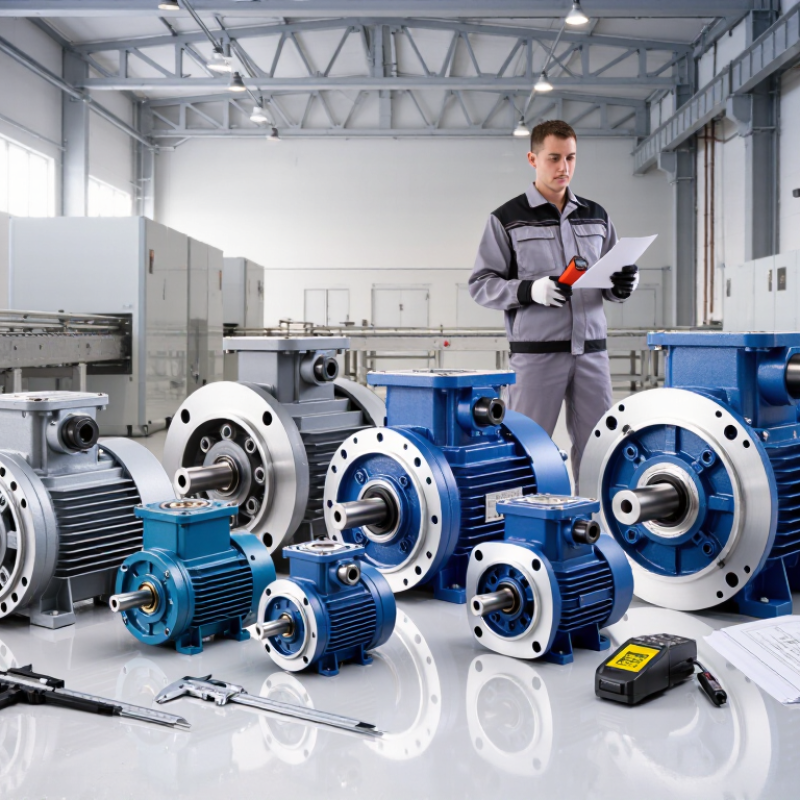
When comparing geared motor manufacturers in 2026, buyers should begin with torque, speed, and application load. A motor’s rated speed does not equal the gearbox output speed. Output speed is approximately motor speed divided by the reduction ratio. A 1,500 rpm motor with a 30:1 reducer may deliver about 50 rpm before slip and other losses.
Torque follows a different path. The gearbox multiplies motor torque by its ratio, but efficiency reduces the final result. For example, a 10 Nm motor, a 20:1 ratio, and 90% gearbox efficiency produce roughly 180 Nm. That estimate is ideal. Starting torque, shock loads, duty cycles, and frequent reversing can change the selection. Small details matter. I have seen specifications fail because engineers checked running torque but ignored acceleration torque.
IEC 60034-30-1 defines IE efficiency classes for motors within its scope, including IE1, IE2, IE3, IE4, and IE5 categories. Higher classes generally reduce electrical losses during operation, but the classification applies to the motor, not automatically to the complete geared motor assembly. Gear teeth, bearings, seals, and lubrication create additional losses. Buyers should request test conditions, rated-load efficiency, duty type, ambient limits, and gearbox efficiency separately. A perfectly efficient motor cannot compensate for an undersized reducer. This distinction is easy to miss. It deserves careful review when comparing global quotations.
For global buyers, geared motor evaluation should begin with verified operating data, not a polished catalog page. In factory audits, I check the nameplate against the test report, gearbox ratio, rated torque, duty cycle, and ambient temperature. A high-efficiency label means little if the motor runs far below its design load. IE3 and IE4 ratings indicate efficiency classes, but buyers should confirm the applicable test method and operating point. Ask for efficiency data at several loads. Real plants rarely run perfectly.
IP65 protection suits dusty workshops and water jets, but it does not permit immersion. Inspect the seal design, cable gland, drain arrangement, and shaft protection. A clean enclosure can still fail when condensation forms during overnight cooling. The small details matter. Ask whether the declared rating covers the complete geared assembly or only the motor housing. This distinction is often missed, and I have seen procurement files repeat it without checking.
NEMA MG 1 provides a useful reference for motor dimensions, performance, markings, and testing when equipment crosses borders. Still, dimensional compatibility should be measured, not assumed. Confirm flange size, shaft diameter, mounting position, voltage, frequency, insulation class, and service factor. Request traceable test records and serial-linked inspection results. Independent verification is worth the modest delay. My own checklist is not flawless; unusual loads and local installation habits can expose gaps. Leave room for engineering review before choosing the lowest quoted unit.
| Evaluation Dimension | 2026 Buyer Requirement | Applicable Standard or Reference | Recommended Verification Evidence | Global Buyer Relevance | Suggested Weight | Evaluation Priority |
|---|---|---|---|---|---|---|
| Energy Efficiency | Motor efficiency should meet IE3 for standard industrial applications, while IE4 is preferred for continuous-duty systems with high annual operating hours. | IEC 60034-30-1:2014 | Third-party efficiency test report, motor nameplate, rated-load efficiency data, and declared operating frequency. | Reduces electricity consumption and operating cost over the service life of the geared motor. | 20% | Critical |
| Ingress Protection | IP65 should be treated as the minimum target where equipment may encounter dust, washdown water, or humid production environments. | IEC 60529 | Valid IP test certificate, enclosure construction details, shaft-seal specification, and installation instructions. | Helps protect the motor against dust ingress and low-pressure water jets from multiple directions. | 15% | Critical |
| North American Electrical Compliance | Products intended for the United States or Canada should provide applicable NEMA electrical characteristics, dimensional information, and recognized certification where required. | NEMA MG 1 | NEMA frame and mounting data, terminal markings, voltage and frequency ratings, certification records, and technical drawings. | Improves interchangeability and supports compliance with local electrical installation practices. | 15% | Critical |
| Rated Torque and Service Factor | Selection should be based on required output torque, speed, duty cycle, acceleration, shock loading, and application service factor rather than motor power alone. | Manufacturer rating tables; IEC 60034-1 for motor rating principles | Gearbox rating chart, thermal capacity data, service-factor calculation, duty classification, and application sizing sheet. | Prevents premature tooth wear, overheating, and insufficient starting or overload capability. | 15% | Critical |
| Thermal Performance | The geared motor should maintain acceptable temperature rise at the specified ambient temperature, duty cycle, altitude, and mounting position. | IEC 60034-1; application-specific thermal rating data | Temperature-rise test results, thermal capacity curves, ambient-temperature limits, and derating instructions. | Supports reliable operation in conveyors, mixers, pumps, packaging equipment, and other continuous-duty machinery. | 10% | High |
| Mechanical Configuration | Available configurations should cover parallel-shaft, helical, bevel-helical, worm, and other application-appropriate arrangements with compatible mounting options. | ISO 9001-controlled technical documentation; applicable IEC or ISO product dimensions | Dimensional drawings, mounting position limits, output-shaft options, flange details, and allowable radial and axial loads. | Simplifies machine integration and reduces redesign requirements during replacement or new equipment projects. | 8% | High |
| Variable-Frequency Drive Compatibility | For inverter-driven applications, the motor should specify permissible speed range, insulation system, bearing protection, braking options, and cooling limitations. | IEC 60034-17; IEC 60034-25 | VFD compatibility statement, inverter-duty insulation data, minimum operating speed, cable requirements, and bearing-current mitigation details. | Reduces the risk of insulation stress, overheating, bearing damage, and unstable low-speed operation. | 7% | High |
| Noise and Vibration | Low-noise gearing, balanced rotating parts, and controlled vibration should be specified for indoor, automated, and operator-facing installations. | ISO 10816 or ISO 20816; ISO 3744 where sound-power testing is required | Noise test data, vibration limits, gear accuracy information, balancing records, and test conditions. | Improves workplace conditions and helps identify alignment, bearing, lubrication, or gear-mesh problems early. | 5% | Medium |
| Lubrication and Service Life | The supplier should define lubricant type, fill quantity, operating-temperature range, maintenance interval, and expected bearing or gear life. | ISO 12925-1 for industrial gear lubricants; application rating data | Lubrication chart, oil or grease specification, L10 bearing-life data where available, and maintenance manual. | Supports predictable maintenance planning and reduces failures caused by incorrect lubricant selection or insufficient service. | 5% | Medium |
| Quality Management and Traceability | Production should be controlled through documented inspection, serial-number traceability, incoming-material checks, and final functional testing. | ISO 9001:2015 | Valid quality certificate, inspection plan, serial-number format, final test record, and nonconformance-control procedure. | Improves consistency across repeat orders and makes warranty or root-cause investigations more efficient. | 5% | Medium |
| Documentation and Export Support | Documentation should be available in English and include datasheets, drawings, wiring diagrams, installation instructions, declarations, and spare-parts information. | IEC 60204-1 interface considerations; destination-market requirements | Complete technical file, digital drawings, packing list, customs data, certificates, and multilingual manuals when required. | Reduces customs delays, installation errors, commissioning time, and communication barriers in international projects. | 3% | Medium |
| Warranty and After-Sales Support | Commercial terms should clearly define warranty duration, exclusions, response time, spare-parts availability, and technical support channels. | Contractual terms; destination-market consumer or commercial regulations where applicable | Written warranty policy, service-level commitment, spare-parts list, troubleshooting procedure, and escalation contact. | Limits downtime risk and provides a practical recovery path when installation or operating problems occur. | 2% | Medium |
2026 Best Geared Motor Manufacturers for Global Buyers
Global buyers should compare geared motors by output power, gear design, and certification evidence. The IEA’s Energy Efficiency 2023 report notes that motor-driven systems consume roughly half of global electricity. Efficiency is not a minor purchasing detail. Small losses become expensive across conveyors, pumps, and automated lines.
Low-power units, often below 1 kW, suit compact machinery and positioning equipment. Medium ranges, from 1 to 30 kW, commonly serve packaging, material handling, and processing systems. Higher ratings require stronger housings, thermal control, and maintenance planning. Helical gears provide efficient, quiet transmission. Worm gears offer high reduction in limited spaces, but they may lose more energy. Bevel-helical designs support right-angle layouts and higher industrial loads. The ISO Survey 2022 recorded 1,265,216 ISO 9001 certificates worldwide. However, certification confirms a quality-management system, not automatic product excellence. This distinction matters. A supplier can still miss a demanding application.
Tips: Request test data at your actual load, speed, duty cycle, and ambient temperature. Check whether ISO 9001 certification covers the manufacturing site, not only the parent organization. Ask for backlash, noise, ingress protection, efficiency, and service-life figures. Compare warranty terms and spare-part availability across regions. A lower purchase price may hide longer downtime. Also verify voltage, frequency, shaft dimensions, and mounting position before approval. These details seem ordinary, yet many avoidable failures begin there.
The chart compares indicative industrial power ranges commonly available for major geared-motor configurations. Values are shown in kilowatts and represent broad catalog ranges rather than the performance of any specific company or brand.
ISO 9001 is a quality-management-system certification, not a product-performance rating. Global buyers should verify the supplier’s current certificate, certification scope, issuing body, validity period, and manufacturing-site coverage before purchasing.
For 2026, geared motor suppliers should be evaluated by application fit, not catalog size. In conveyor systems, packaging lines, and warehouse equipment, continuous duty requires stable thermal performance. A motor running eight hours daily needs different protection than one starting twice per hour. Suppliers should state rated torque, service factor, insulation class, and duty-cycle limits clearly.
Load capacity also changes the selection process. A small indexing table may need precise low-speed torque, while a stone-processing conveyor demands high starting torque and stronger bearings. Ask for load charts at the actual speed. Do not rely only on peak torque.
Real installations include shock loads, misalignment, dust, and voltage variation. These details often expose weak assumptions.
Experienced suppliers provide test records, dimensional drawings, efficiency data, and practical maintenance guidance. Their engineers should explain how ambient temperature affects grease life and winding temperature. Food-processing equipment may require corrosion-resistant surfaces and frequent washdown tolerance. Lifting systems need controlled braking and a verified holding design. A spreadsheet can still mislead. I have seen selections fail because the duty cycle was estimated, not measured. Request sample calculations and review the service conditions with the supplier before ordering. That small step can prevent overheating, unexpected noise, and costly line stoppages.
For global buyers, a geared motor is not ready for approval because its catalog looks complete. Ask for the exact IEC motor designation, gear ratio, output torque, insulation class, and duty rating. Request current test reports, declarations, and drawings matching the quoted model. CE marking should support applicable EU requirements, not merely appear on a label. UL evidence may also require product-specific certification or recognized component details for your destination.
Check the nameplate against the datasheet. Small mismatches matter. A 230/400 V motor, for example, may behave differently under your plant’s supply and starting method. Confirm ingress protection, noise limits, thermal protection, shaft dimensions, and mounting position. Ask whether IEC dimensions are truly interchangeable. They are not always.
Warranty terms should state duration, covered parts, response time, and freight responsibility. After-sales coverage needs more than an email address. Request spare-parts availability, fault-analysis procedures, remote commissioning, and local service contacts. Set a written escalation path before payment. One recurring sourcing lesson is that certificates may be valid, yet outdated for the shipped revision. Recheck serial numbers and revision codes during inspection. No checklist is perfect. Leave room for doubt, especially when delivery pressure rises.
Compare the nameplate with the test report, ratio, torque, duty cycle, and ambient temperature. Catalogs can look perfect. Check the actual operating data.
They identify motor efficiency classes under a specific test method and operating point. Request efficiency results at several loads. A lightly loaded motor may perform differently.
IP65 generally suits dust exposure and water jets, but it does not allow immersion. Inspect seals, cable glands, drains, and shaft protection. Condensation still causes trouble.
Yes, confirm whether the rating applies to the full assembly or only the motor housing. This distinction is often overlooked. Ask for written confirmation.
Review actual speed, rated torque, starting torque, shock loads, misalignment, and voltage variation. A small indexing table needs precision. A heavy conveyor needs stronger bearings.
Request thermal data, service factor, insulation class, rated torque, and duty-cycle limits. An eight-hour conveyor run creates different heat demands than occasional starts. Measure the real cycle.
Verify flange size, shaft diameter, mounting position, voltage, frequency, and insulation requirements. Do not assume dimensional compatibility. Measure it.
Confirm duration, covered parts, response time, freight responsibility, spare parts, and fault-analysis procedures. Request local service contacts and remote commissioning support. An email address is not enough.
Compare serial numbers, revision codes, nameplates, drawings, and current test records during inspection. Certificates can be valid but outdated. Delivery pressure encourages mistakes.
No. Review sample calculations, unusual loads, temperature, maintenance access, and installation habits first. My checklist is not flawless. Engineering review may reveal hidden risks.
This 2026 guide explains how to evaluate a Geared Motor for international industrial applications. It introduces key concepts such as torque, output speed, gear ratios, service factors, and duty cycles, while outlining how IEC 60034-30-1 efficiency classes, including IE3 and IE4, support energy-conscious equipment selection. It also examines practical performance requirements such as IP65 protection, thermal management, noise control, and compatibility with NEMA MG 1 specifications.
The comparison framework focuses on motor power range, gear configurations, load capacity, operating environments, and ISO 9001 certification. It also identifies suitable geared motor solutions for industries with different continuous, intermittent, or heavy-duty demands. For global buyers, the purchasing checklist covers IEC and CE documentation, UL requirements where applicable, warranty terms, spare-parts availability, technical support, delivery capability, and after-sales service. Together, these criteria help buyers select reliable, efficient, and properly certified equipment while reducing lifecycle costs and operational risks.

KINOV Motor